Empire as a Machine
Money, Technology, and Organization in the Ottoman State
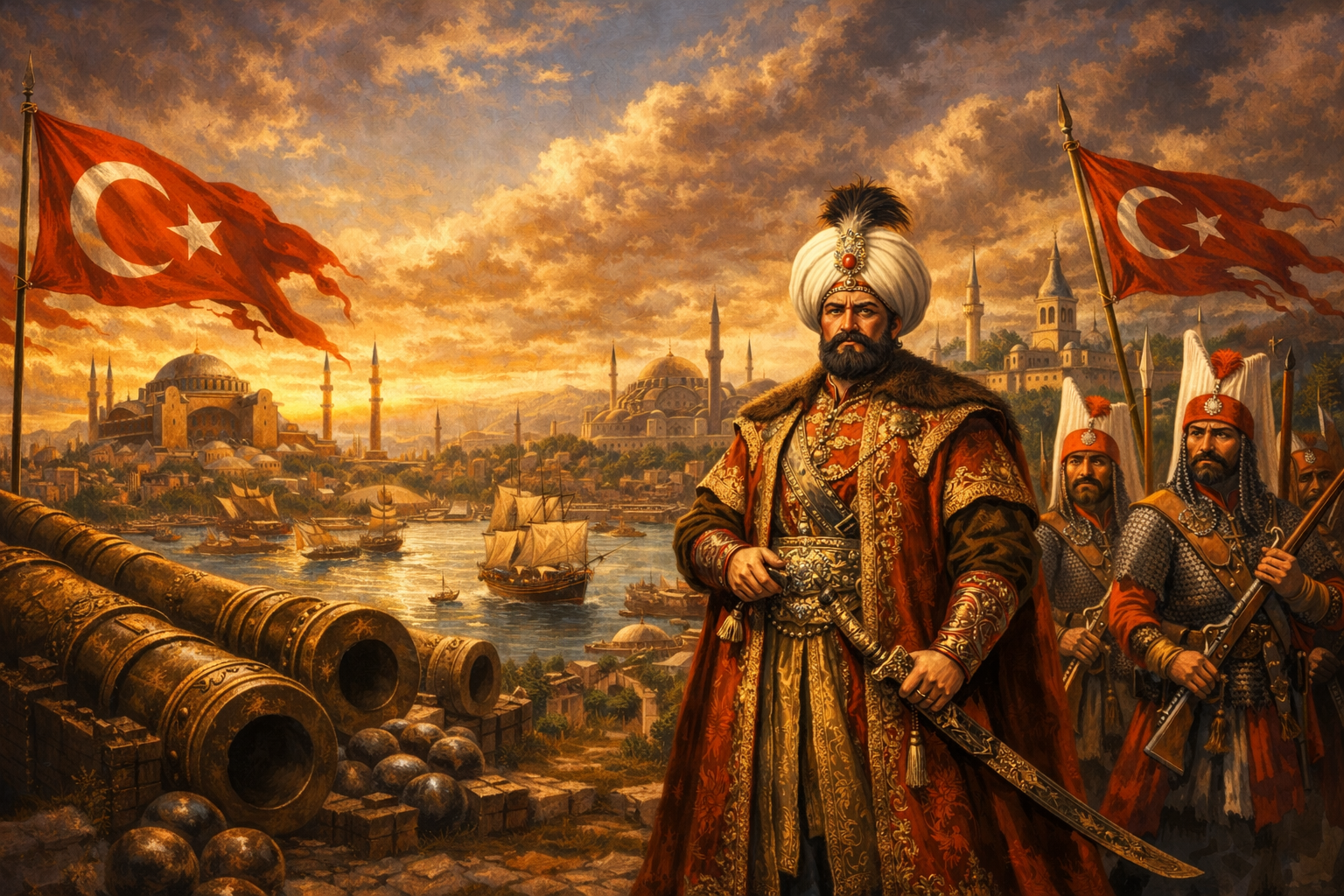
The Empire was born on a myth saying that its founder, Osman, had a mystical dream where the moon came to his chests and tree started to grow out of his navel. Its branches are stretched across three continents making a shade over them. Be it a myth or not, Ottoman Empire was indeed one of the greatest empires ever, ruling the territories of many cultures, religions and languages.
What had me specifically interested here is how this state that lasted for over 600 years, being almost constantly at war, managed to pay all of that. We all know that wars are not cheap, they are draining state budgets and people are getting tired of it sooner or later.
What Ottomans Did Differently?
They had unusual military organization, based on the timar system, a system where the state would give parts of freshly conquered land to some of its soldiers. These soldiers were belonging to the rank of so-called spahis. A spahi was the highly equipped soldier, in some degree - independent landowner, who was solely responsible for his horse(s), armor and entire equipment coming with it. As said, he owned a land as a gift from sultan, from which he could collect taxes from peasants who were working it. In return, he had to answer the call of the sultan every time when there was a military campaign. In other words, sultan had a cavalry for almost no costs. At the same time, this cavalry was highly motivated, because with their defeat and loss of the land, they would lose source of their income as well. They fought not just for the sultan, but also for themselves, to preserve what they have or to acquire new land. In the long run, more conquered land created more spahis, more spahis meant more military power, more military power created the conditions for further conquest.
The very nature of the timar system had a huge role in logistics during the war. In such times, you need to move your forces fast across the vast distance. But for Ottomans, much of their military was already in place, on their own land positioned close to the empire borders. This saved lot of time and money for the court just by having the system as it is.
Another rank in the military were the Janissaries, elite infantry directly under the sultan’s rule. Most of them came from the conquered areas, with non-Muslim population, where young healthy teenagers were taken out of their families and sent to the court where they were trained to become soldiers, or if they showed skills for governance, engineering or administration, they could even be assigned to specific function within the empire. This process was known as devshirme and we won’t get here into moral aspects of it, this is not the focus right now. Janissaries, by default, were not allowed to be married and to start their own families till the age of 40. What the empire achieved with this, were the young soldiers completely loyal to sultan and entirely focused on their only job they were trained for, the war. They were paid directly from the treasury.
In their later years they would normally retire and get pension. By rewarding their service, the state bought social peace and avoided potential rebellion.
Together with the military organization, such system relied heavily on the innovation and seizing the right opportunity at the right time.
Innovation and Culture
When the Basilic cannon was offered to Byzantine emperor at that time, he rejected the offer thinking it was too expensive. When the same offer reached the sultan, he immediately took a chance and provided everything needed for the construction when he heard about the capabilities and power of such gun. The price was high, but reward higher: the conquest of the jewell on the Bosphorus, the city that would become the new capital of the empire. In a short time, Istanbul grew into the first megalopolis of the Ottoman state, embracing different cultures and drawing people from different sides of the empire. In such growing city, mixed by different cultures, is natural that the new space for innovations and fresh ideas is created.
Alongside cannons, Ottomans adopted usage of firearms at the early stage of their state. Damascus steel was used to build muskets, a gun that was predecessor of the today’s rifles, which were primarily used by the Janissaries. This type of equipment could play a significant role in decisive moments on the battlefield, making the army even stronger.
Innovation was encouraged thru new schools and research in different areas. First educational complex was opened in Istanbul, shortly after its conquest. It included a mosque, an elementary school, hospital, public kitchens and other buildings. These schools became the foundation for later research on medicine, astronomy, mechanics, architecture and other fields. With the knowledge and new techniques comes the prosperity, hand in hand.
Establishment and maintenance of the entire education system, required a significant and crucial resource. But, where did the money come from?
Cashflow
With the timar system, the state had turned the war into a cashflow machine. Newly conquered land didn’t only sustain spahis, it also expanded the tax base. Life went on with new rulers. People farmed, traded and paid taxes. The state was tolerant toward different nations and cultures, it didn’t enforce the conversion to Islam and allowed free practice of religion. What was imposed, was the new law. Under sharia law, theft and fraud were treated seriously and punished visibly. The punishment for the theft could be the loss of a hand, making it as a clear message to everyone who could potentially engage in such a risk. For society, this meant stability, peace and chance to prosper. For the state, it meant new revenue that arrived quietly, as long as everyday life continued.
Another part of the system was the geographical position of the Ottoman State. Established on the crossroads between East and West, it had a dominant role in a world trade at that time. Much of the trade between Europe, Mediterranean and Asia passed thru its territory. With every caravan passing thru the mainland, every ship passing thru Bosphorus, each movement came with fees, tolls and duties. Such revenue came with almost no additional effort, a form of passive income compounded on the already established and functional system.
When talking about compounding, this state knew where and how to use it. Using its position as a leading military power in the region it spread its dominance on some neighboring states to place them as vassals. The vassal states kept their formal independence, but every year needed to pay to the court some amount as a price of keeping it. For the sultan, this was one more source of the passive income. Compared to the regular taxation, it was even more efficient; he didn’t need to spend any money on the new administration and governance. That was outsourced for free.
All of this made the Ottoman State self-sustained so much that it didn’t need any foreign debt. This was also one of the pillars of its power. With such healthy economy, the state could act independently in any foreign relations.
But, every system works, until it doesn’t. Where this one began to fail, is the topic for some of the next posts.
Part 1 of 2 in the "Ottoman Empire" series
- When Power Stops Compounding
- Empire as a Machine